Where color comes from
Sun, shade, and a long, slow ferment
A wrapper's color is written in three places: the field, the barn, and the fermentation pile.
In the field
Leaf grown under cheesecloth tents — shade-grown — gets diffused light, so it grows thin, elastic and pale. Leaf grown in open sun — sun-grown — thickens up to protect itself, with more oils and darker color. Where the leaf sits on the plant matters too: the top leaves see the most sun and grow thickest.
In the barn
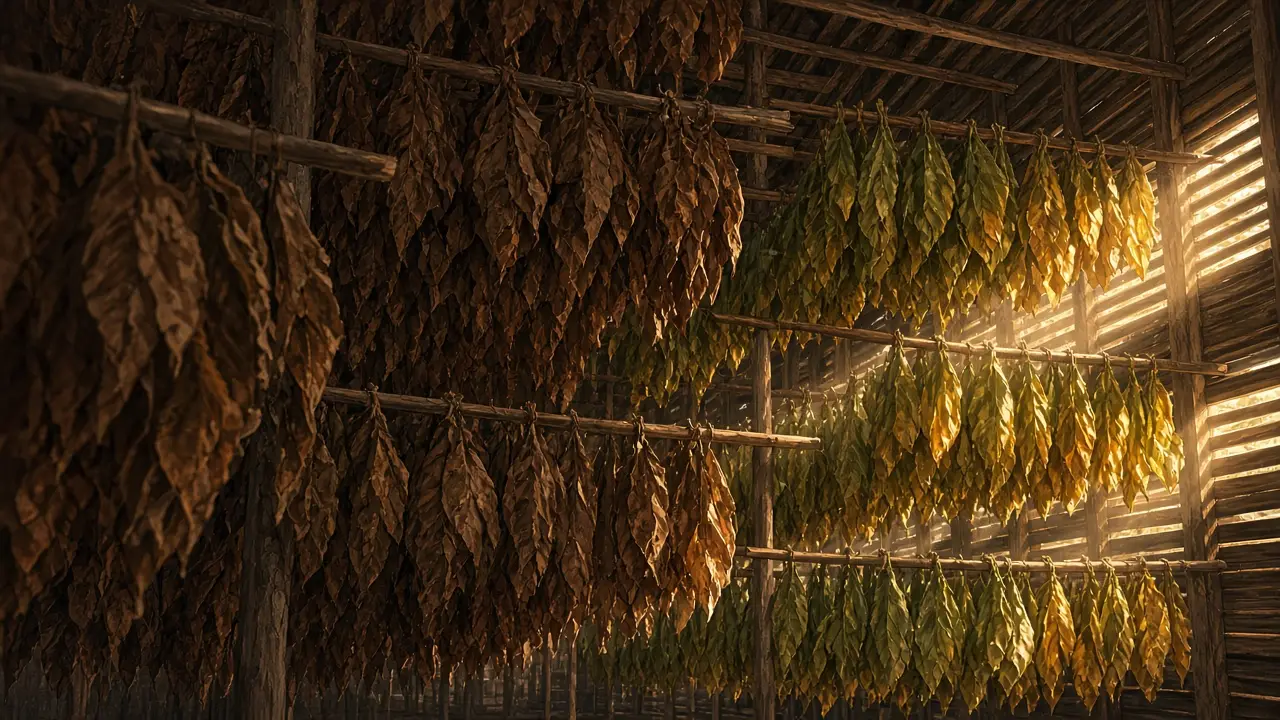
After harvest, leaves are hung to air-cure for several weeks. Green chlorophyll fades and the leaf turns the golds and browns you recognize.
In the pile
Cured leaves are stacked into large piles where moisture and pressure create natural heat. Workers turn and rebuild the piles to keep the temperature in check. This fermentation breaks down ammonia and harshness, and the longer and warmer it goes, the darker and sweeter the leaf becomes. Maduro and Oscuro wrappers get the longest, most intense treatment — which is why they taste of cocoa and molasses rather than smoke and pepper.